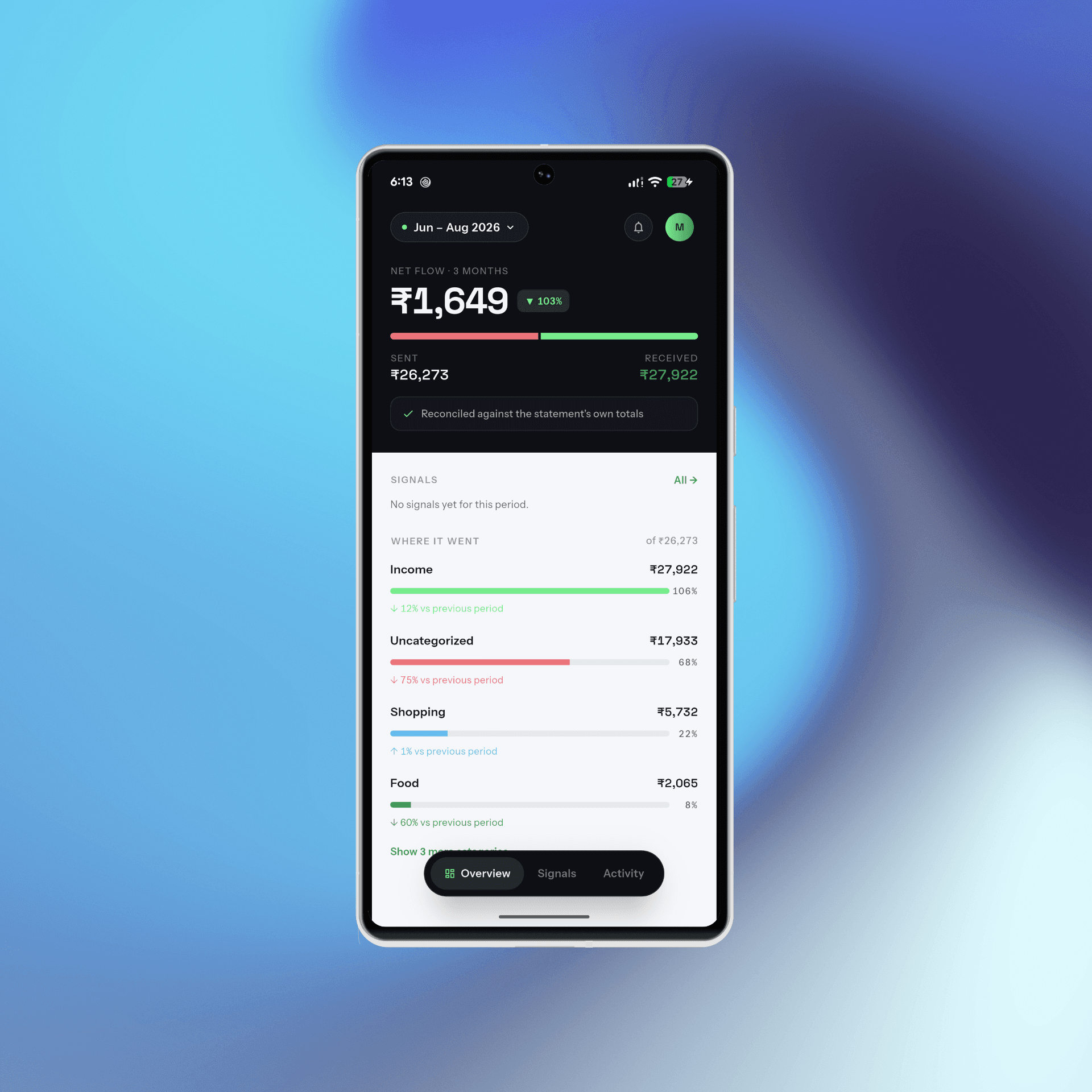
A second set of eyes on every transaction you make.
Every transaction is read, cleaned up and categorized the moment it lands — no manual tagging.
It builds an understanding of how you actually spend, and gets more confident the longer it watches.
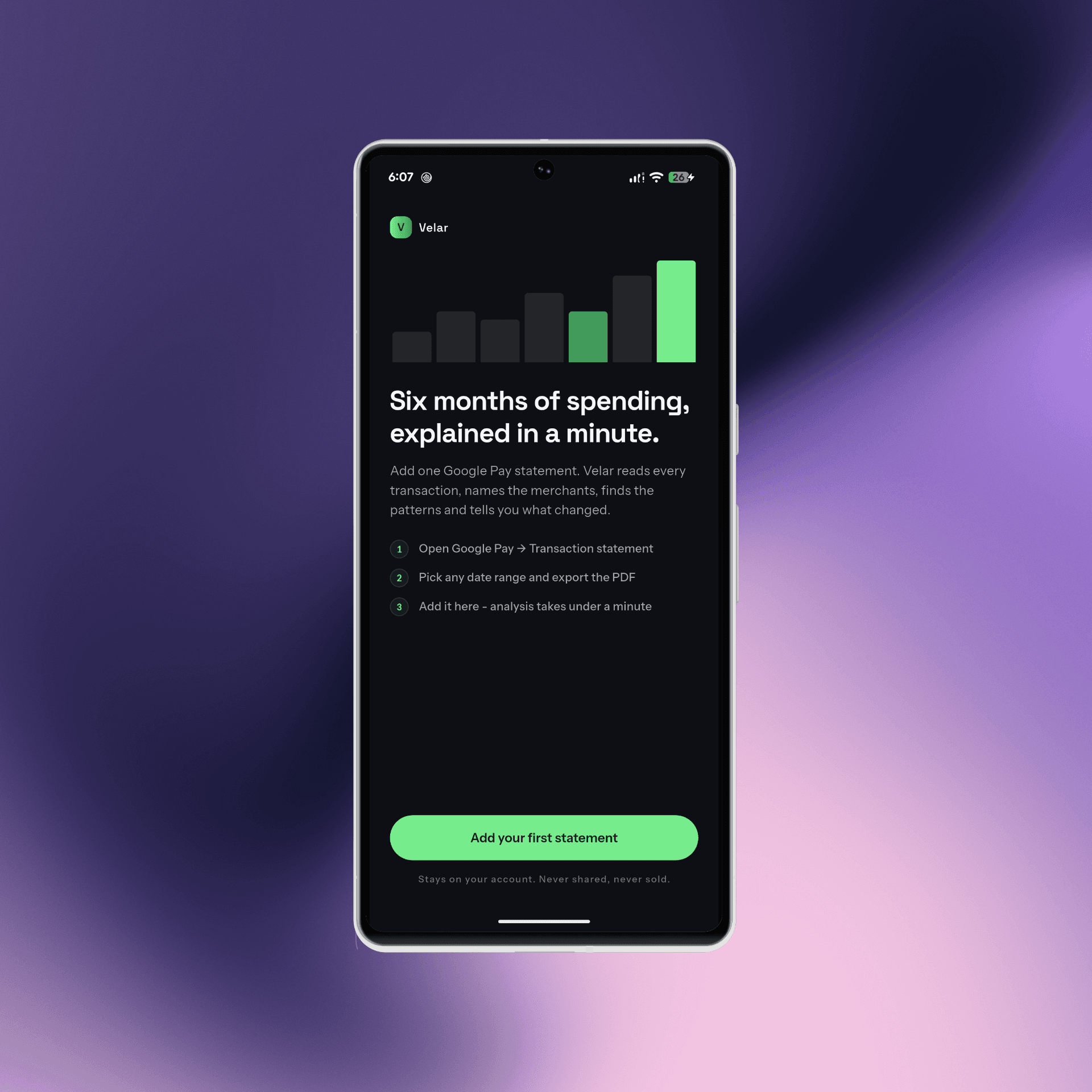
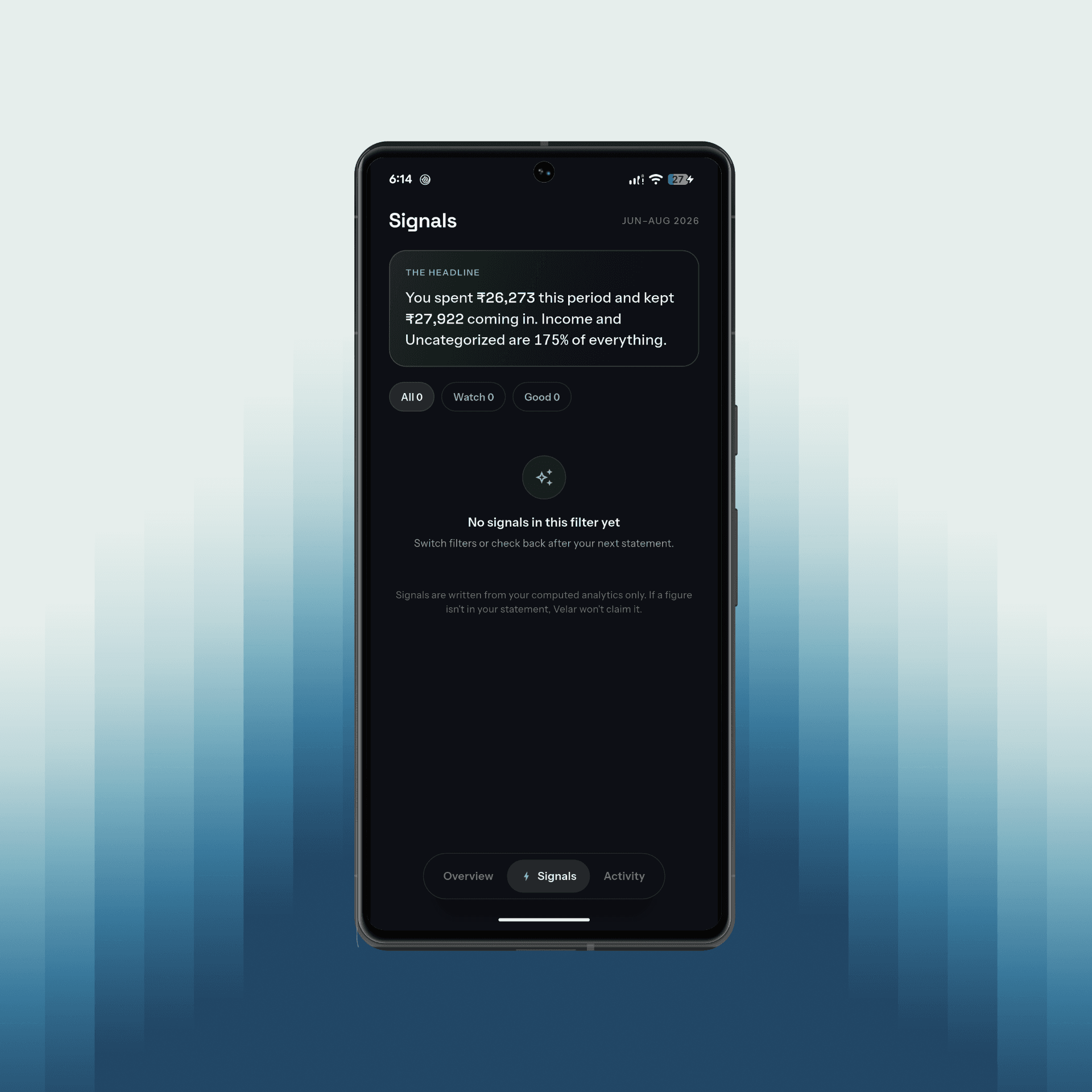
It flags what changed, explains why, and never guesses.
Recurring charges, one-off spikes and slow drifts in behavior are all caught automatically.
Every explanation is grounded in your own transaction history — if the data can't support an answer, none is given.
Why
Built on three commitments: read every transaction correctly, understand the person behind them, and only ever explain what the data actually supports.
Merchant names get cleaned up, spending gets clustered into patterns, and subscriptions and anomalies get caught as they happen. Every correction you make teaches it directly, so what you’re using next month is sharper than what you started with.
Ask about any transaction and get an answer grounded in your own data
Wait, when did I start paying for this?
This charge first appeared four months ago under a different merchant name. It's been billed monthly since — there was only just enough history to confirm it's recurring.
Why does it feel like I'm spending more this month?
You are. Dining is up 40% over your three-month average, concentrated in the last two weeks. Everything else is roughly flat.
Why is this filed under bills instead of shopping?
It's billed the same amount on the same day for five straight months, which is what a bill looks like. Happy to move it if that's wrong.
Get early access
FAQ
Connect a statement or forward a PDF and categorization starts within minutes. No chart of accounts to build first, no manual tagging to get through before it's useful.
Anyone who wants an accurate, honest picture of where their money actually goes — without spending an evening reconciling bank descriptions in a spreadsheet by hand.
Every transaction gets read, matched to a real merchant, and sorted into a category. Recurring charges and subscriptions are tracked automatically, unusual spikes get flagged, and any correction you make is remembered so the same mistake doesn't repeat. The more it sees, the more confident it gets — a merchant it's guessed at a few times eventually becomes one it's sure of.
Every explanation is built only from your own transaction history — nothing is invented to fill a gap. If there isn't enough data to answer confidently, it says so instead of guessing.
A small team building the categorization and behavioral-intelligence layer personal finance tools have always needed but rarely gotten right.